Why Do Healthcare Data Breaches Pose Serious Privacy Risks and High Financial Costs?
Criminals use stolen health information for identity theft, fake insurance claims, extortion, and blackmail. Because this data is so valuable, hospitals and healthcare organizations are common targets for cyberattacks.
The healthcare industry has become one of the most targeted sectors for cyberattacks. Recent global studies show that it records the highest average cost of a data breach, more than USD 7.42 million per incident. This figure is significantly higher than in many other industries.
But this issue is not just about money. It is about privacy, trust, patient safety, and the ethical responsibility of protecting some of the most sensitive information about individuals.
Why Healthcare Is a Prime Target
Healthcare organizations hold extremely sensitive data. A hospital does not just store names and phone numbers. It stores:
• Medical histories
• Diagnostic reports
• Mental health records
• Prescription details
• Insurance information
• Payment data
• Identification documents
Medical records are much more valuable to criminals than credit card details. If a credit card is stolen, it can be blocked quickly. But a person’s medical history cannot be changed. Once it is leaked, it can be misused for many years.
Criminals use stolen health information for identity theft, fake insurance claims, extortion, and blackmail. Because this data is so valuable, hospitals and healthcare organizations are common targets for cyberattacks.
The Digital Transformation of Healthcare
Today, healthcare relies heavily on technology. Hospitals use electronic health records, digital healthcare platforms, wearable health devices, AI-based diagnostic tools, connected medical machines, and cloud storage.
Technology has improved efficiency and patient care. However, it has also increased cyber risks. Every connected device can serve as a potential entry point for hackers. Many medical devices were built to focus on performance and reliability, not cybersecurity.
Many hospitals still use old systems. These older systems may not meet modern security standards. Replacing or upgrading them can be costly and may interrupt operations. As a result, security weaknesses often remain unresolved.
When a Breach Happens, Patient Care Is Affected
In most industries, a data breach mainly causes financial loss and damage to reputation. In healthcare, it can also directly impact patient care.
If systems are locked because of a ransomware attack:
- Doctors may not be able to see patient records
- Surgeries may have to be delayed
- Lab reports may not be available on time
- Emergency patients may be sent to other hospitals
Hospitals cannot simply shut down operations. Patient lives depend on constant access to medical information. Because of this urgency, healthcare organisations may feel pressured to pay ransom demands quickly, which increases their financial losses.
The average cost of USD 7.42 million includes ransom payments, restoring systems, legal expenses, investigations, regulatory fines, and long-term recovery efforts.
The Privacy Aspect
Health data is extremely personal. It can reveal a person’s physical illnesses, mental health conditions, genetic details, reproductive history, and even lifestyle habits.
From a privacy perspective, health information is considered the most sensitive type of personal data under many data protection laws.
For example:
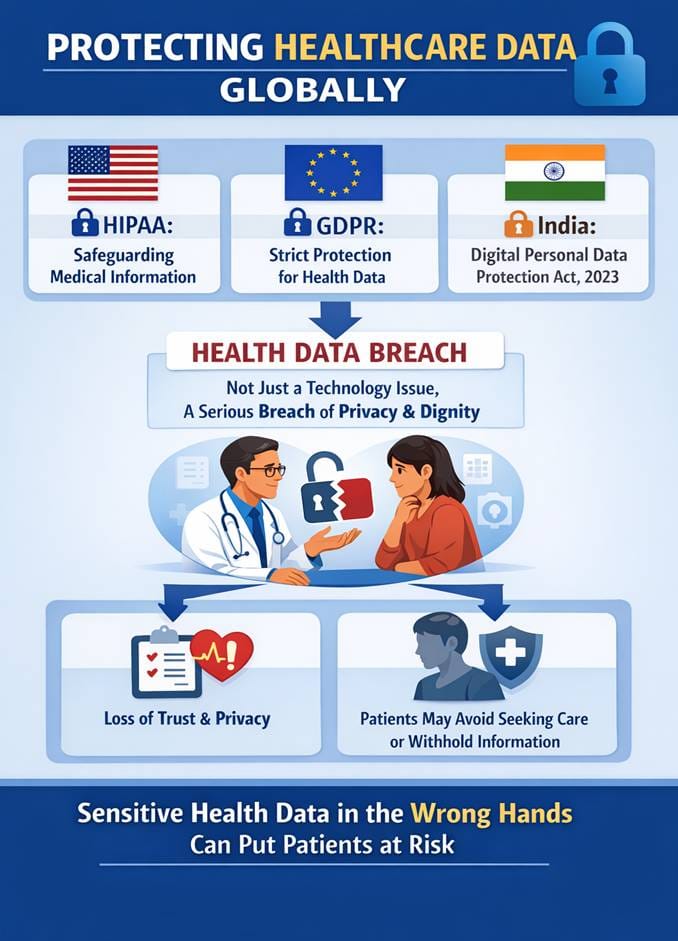
- In the US, the Health Insurance Portability and Accountability Act (HIPAA) impose strict requirements to safeguard medical information.
- In the European Union, the General Data Protection Regulation (GDPR) identifies health data as a “special category” that requires stronger protections.
- In India, the Digital Personal Data Protection Act, 2023, governs the processing of personal data, and health information must be handled with heightened care due to its sensitive nature.
- When healthcare data is compromised, it is not merely a technology issue. It represents a serious breach of an individual’s privacy and personal dignity.
- Patients disclose highly sensitive information to doctors based on trust. A data breach undermines that trust and may discourage individuals from seeking medical help or from being fully open about their health conditions.
Legal and Regulatory Consequences
Healthcare organizations operate within strict regulatory environments.
A breach can result in:
- Obligatory notification to regulatory bodies
- Public disclosure obligations
- Formal investigations
- Significant financial penalties
- Civil claims or legal action by affected individuals
Reputational Damage and Loss of Trust
Healthcare depends on trust. Patients must feel safe sharing their personal information.
A serious breach can lead to:
- Loss of patient confidence
- Fewer new patient registrations
- Patients withholding important medical details
- Long-term damage to the organization’s reputation
Unlike financial losses, reputational damage is hard to measure and can take years to repair. From a privacy perspective, once sensitive data is exposed, the harm cannot be undone.
Third-Party and Supply Chain Risks
Hospitals work with many external vendors, such as cloud providers, billing agencies, insurance processors, labs, IT companies, and medical device manufacturers.
These vendors often have access to patient data. If even one vendor has weak security, the entire system becomes vulnerable. Many recent breaches have started through third parties.
This makes vendor risk management essential. Contracts should clearly define security responsibilities and breach reporting duties. However, smaller vendors may not always have strong cybersecurity systems, creating weak links.
Human Error and Insider Risks
Not all breaches are caused by advanced hackers. Many happen because of simple mistakes, such as:
- Clicking on phishing emails
- Using weak passwords
- Sharing login details
- Sending data to the wrong person
- Losing unencrypted devices
Healthcare staff work in busy, high-pressure environments. Patient care is their main focus, so cybersecurity may not always receive attention. Regular training and awareness programs are therefore critical. Privacy should be part of the organization’s culture, not just the IT department’s responsibility.
Ransomware and Double Extortion
Ransomware is a major threat to healthcare. Attackers may both lock systems and steal data. They then threaten to publish the stolen data unless a ransom is paid.
This “double extortion” puts huge pressure on hospitals. They face system shutdowns and the risk of sensitive patient information being exposed. Public release of medical details can cause emotional harm, social stigma, and discrimination.
This shows that cybersecurity in healthcare is deeply connected to privacy.
Patient Safety and Ethical Duty
Cyberattacks can directly affect patient safety. If records are missing or changed:
- Treatment may be delayed
- Medication mistakes may happen
- Important medical alerts may be missed
Healthcare providers have a duty to protect patients. Safeguarding personal data is part of that responsibility. Privacy is not only about following the law but also about respecting human dignity.
Why the Costs Are So High
The high average breach cost (over USD 7.42 million) is due to:
- Long system downtime
- Forensic investigations
- Legal and regulatory penalties
- Compensation payments
- Rebuilding systems and upgrading security
- Reputational harm
- Higher cyber insurance costs
Healthcare breaches often take longer to detect and control; the resulting damage is often much higher.
The Way Forward
To reduce risks, healthcare organizations should:
- Make cybersecurity a leadership priority
- Collect only necessary data and keep it for a limited time
- Use strong access controls and multi-factor authentication
- Ensure data is protected through encryption
- Conduct regular cybersecurity risk assessments
- Carefully assess third-party vendors
- Develop and regularly test an incident response plan
- Continuously monitor systems for threats
Conclusion
Healthcare has very high breach costs because it deals with extremely sensitive information, provides essential services, and must follow strict laws.
As healthcare becomes more digital, the risk of cyberattacks will continue to rise. At the same time, people will expect stronger privacy and better security.
Protecting patient data is not just an IT responsibility. It is both a legal duty and a moral obligation. The average cost of USD 7.42 million should serve as a serious warning.
In healthcare, keeping data safe ultimately means keeping people safe.
Key Takeaways
- Healthcare data is extremely sensitive – Medical records contain deeply personal information, making them highly valuable to criminals and especially harmful if exposed.
- Breaches affect patient care, not just data – Cyberattacks can disrupt hospital operations, delay treatments, and directly impact patient safety.
- Privacy violations have long-term consequences – Unlike financial data, medical information cannot be changed, and the damage from exposure can be permanent.
- Costs exceed ransom payments – Legal penalties, compensation claims, system recovery, reputational damage, and regulatory scrutiny all contribute to the high average breach cost.
- Cybersecurity is both a legal and ethical duty – Protecting patient data is not just an IT function; it is essential to maintaining trust, complying with laws, and safeguarding human dignity.